Why I Paint Without Form: My Philosophy of Abstraction
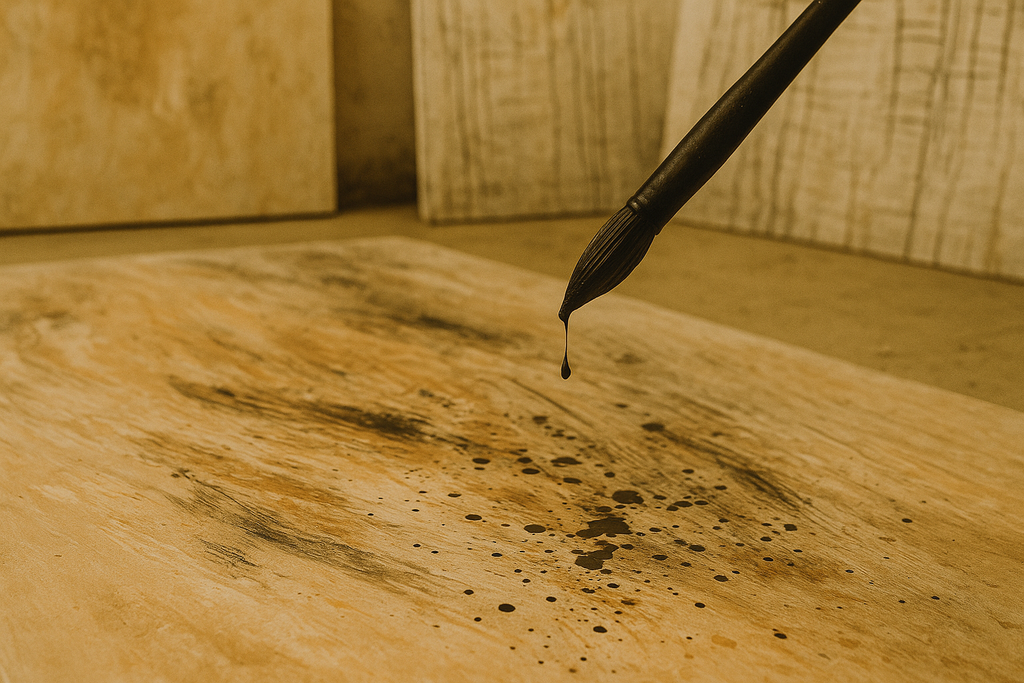
Form dissolves so that something more essential can speak.
I don’t begin a painting with the intention of creating a form.
In fact, the absence of form is often where the work truly starts.
When form appears too early, it fixes meaning. It asks the viewer to recognize, to label, to understand. But abstraction, as I practice it, moves in the opposite direction. It opens space rather than closing it. Painting without form allows the work to remain fluid — responsive to movement, energy, and the subtle impulses that arise in the moment of creation.
For me, painting is not an act of construction but of attunement. I listen more than I decide. The brush moves not to outline an object, but to register a sensation — pressure, rhythm, resistance, release. What emerges on the surface is not an image of something, but a trace of a process. A record of energy passing through the body, through the hand, into material.
Form, when it appears, is temporary. It may surface briefly, then dissolve again. I allow it to come and go without attachment. This is important. Once I try to hold onto a recognizable shape, the painting begins to close in on itself. It becomes descriptive rather than experiential. By painting without form, I keep the work open — both for myself and for whoever encounters it later.
Abstraction gives me permission to work beyond representation. I am not bound by perspective, proportion, or narrative logic. Instead, I focus on balance, tension, density, and flow. These elements operate on a more intuitive level. They are felt before they are understood. A painting can feel grounded or unsettled, quiet or charged, expansive or compressed — without depicting anything at all.
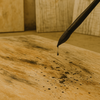
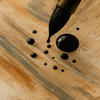
This is where energy becomes central. Every mark carries a charge. A slow, weighted stroke holds a different presence than a quick, fractured one. Ink pooling on a surface speaks differently than pigment dragged thinly across it. These are not aesthetic choices alone; they are responses to internal states. Painting becomes a way of translating what is intangible into something that can be sensed visually.
I am often asked what my paintings represent. I don’t resist the question, but I don’t answer it directly either. Representation implies a fixed reference point. My work is less about pointing to something outside itself and more about creating a field of experience. The painting does not explain. It invites. Meaning is not embedded; it is activated through encounter.
By painting without form, I also release the viewer from obligation. There is no correct interpretation, no image to decode. The work meets each person where they are. What someone sees or feels in front of an abstract painting says as much about their inner state as it does about the artwork itself. This exchange is where abstraction becomes alive.
Ultimately, my philosophy of abstraction is grounded in trust. Trust in intuition. Trust in material. Trust in the viewer. Painting without form is not a rejection of structure, but a belief that structure can emerge organically — through movement, through repetition, through attention. It is a way of working that values presence over control.
In this space without form, I find clarity.
Not the clarity of definition, but the clarity of resonance.
And that is where the painting feels most true.
-
Đăng trong
Artist Story