What Abstract Art Means to Me: The Story Behind My Creative Journey
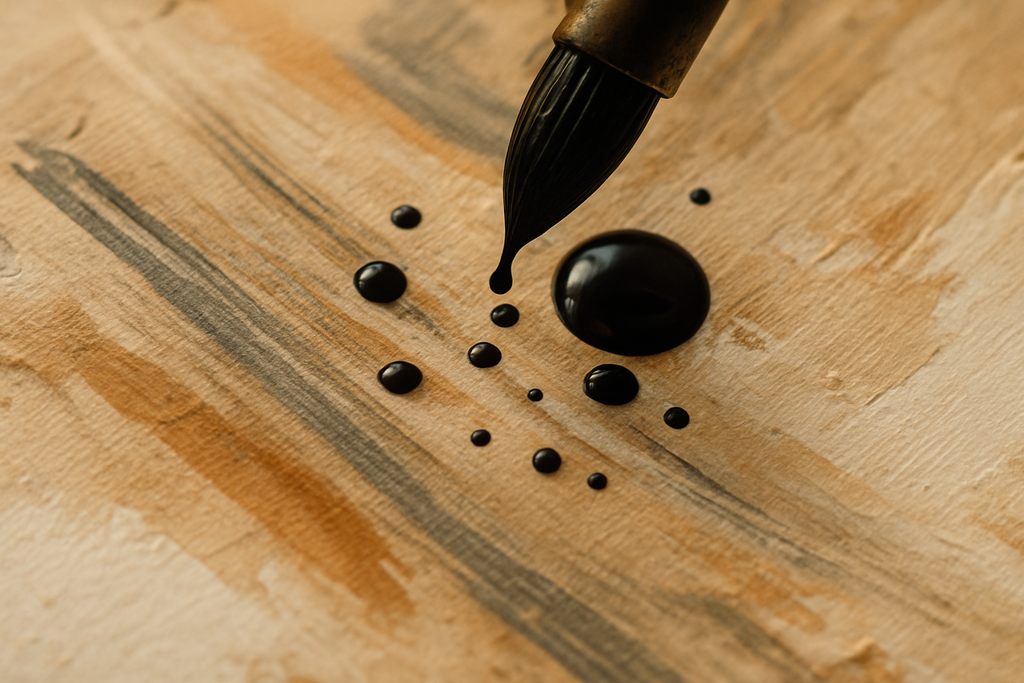
Abstraction is not something I control — it is something I listen to.
When I paint abstractly, I am not trying to illustrate an idea or represent something specific. The process begins long before a recognizable form appears. It starts with a subtle shift inside — a sensation, a rhythm, a pulse of energy that asks to be expressed visually. I follow it without trying to label it. The painting grows from a place where intuition leads and logic steps aside.
Abstract art, for me, is not an escape from clarity but a different kind of clarity — one that does not rely on objects, figures, or narratives. Instead, it relies on presence. In the studio, I work by sensing rather than planning. The movement of the brush, the weight of a line, the emergence of a color — these elements feel less like choices and more like responses. As if the artwork is speaking in a language beyond words, and my task is simply to translate its vibrations onto the surface.
There are moments when a color insists on being placed somewhere, when a gesture arrives with confidence but no explanation. I don’t question it. I let the energy flow through the hand, through the brush, into the canvas. The result is rarely predictable. But prediction isn’t the point. Abstraction allows me to create without forcing meaning, and in doing so, meaning reveals itself naturally.
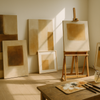
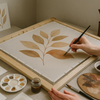
This intuitive movement is also why organic forms, soft transitions, and earth tones often appear in my work. They resonate with the kind of energy I tend to sense — gentle, grounding, subtle, yet quietly intentional. These qualities feel honest to me, not because they reference something literal, but because they reflect the pace and depth of internal experience. Nothing in abstract art needs to “stand for” anything specific; it simply needs to feel alive.
What I find most fascinating is how a painting evolves once the energy guiding it settles. The finished work often feels like a recording of a moment — not a moment in time, but a moment in awareness. It carries traces of movement, stillness, resistance, softness. And when someone else views it, they bring their own sensations into that space. The artwork becomes a meeting point between my intuition and theirs. It no longer belongs solely to the person who created it.
My creative journey continues to be shaped by this interplay of intuition and openness. I don’t approach abstract painting with the intention of revealing truths or telling personal stories. Instead, I approach it with curiosity: What will this energy become if I allow it to move?
Some days the answer is quiet and minimal; other days it is layered, textured, full of tension. But whatever emerges, it reflects something genuine — not a memory, not a narrative, but a state of being.
In the end, what abstract art means to me is simple:
It is the space where intuition finds form.
Where movement turns into atmosphere.
Where energy becomes a visual language of its own.
If the viewer feels something — even if they cannot name it — then the painting has done what it came to do. Not by explaining, but by resonating.
-
Posted in
Artist Story