My Process of Painting on Silk: Traditional Meets Modern

There is something almost otherworldly about painting on silk. The moment the brush touches the fabric, the color doesn’t simply sit on the surface—it travels, breathes, and blooms in ways that feel alive. Silk refuses to be controlled entirely. Instead, it invites the artist into a quiet conversation, where intuition becomes just as important as technique. Over time, I’ve come to realize that my process on silk is not only about creating an artwork. It is about honoring a tradition, then gently reshaping it through a modern lens.
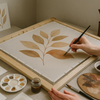
My work often begins long before pigment meets fabric. I spend hours choosing the right silk—usually mulberry silk with a soft sheen, because it carries light in a way that makes colors feel both delicate and luminous. I stretch the silk onto a frame, making sure the tension is just right. Too loose, and the colors bleed uncontrollably; too tight, and the fabric loses its subtle softness. This balance between structure và freedom is the heart of silk painting.
Silk has a memory of its own. Every brushstroke flows differently depending on humidity, heat, the softness of the fibers, or the weight of the dye. In traditional methods, artists often rely on resist lines to control the movement of color. I appreciate that heritage, but I’ve learned to embrace a more modern balance—sometimes guiding the pigment, sometimes letting it wander and reveal unexpected beauty. This combination allows contemporary abstraction to emerge naturally from the fluid language of the material.
What I love most about silk is the slowness it teaches. The dye sinks in quietly, layer by layer. Some days I watch a color spread like mist across water, forming shapes I could never have designed intentionally. Other days I refine the composition with precise marks, letting sharper, modern gestures contrast against the softness of the fabric. In this blend of intention and spontaneity, the painting finds its own rhythm.
Modern tools also play a role in my process. I often sketch digitally beforehand, exploring the relationship between shapes and color palettes before bringing them to silk. This preparation helps me adapt contemporary design sensibilities into a medium rooted in tradition. Once the brush begins to move, however, everything becomes instinctive. Technology guides the mind, but the hand must stay present and sensitive to the living nature of silk.
When the painting is finally complete, I steam the silk to fix the colors permanently. As the steam lifts, so does the artwork’s true character—soft transitions, luminous transparencies, and textures that shift gently depending on the angle of the light. What fascinates me every time is that no two pieces can ever be identical. Even if I wanted to repeat a painting, the silk would respond differently. It is this unpredictability, this sense of becoming rather than being, that keeps me devoted to the medium.
Painting on silk is where tradition meets today. It carries echoes of centuries-old craft, yet it remains a surface open to contemporary storytelling. Through this process, I am reminded that art is not only about technique; it is also about surrendering, listening, and allowing beauty to unfold in its own time.
Every piece I create is a quiet dialogue between the past and the present—between the discipline of a timeless craft and the freedom of modern expression. And perhaps that is why silk continues to captivate me: it holds both worlds at once, shimmering gently between them.
-
Posted in
Artist Story